Collecting and creating: why ugly art matters
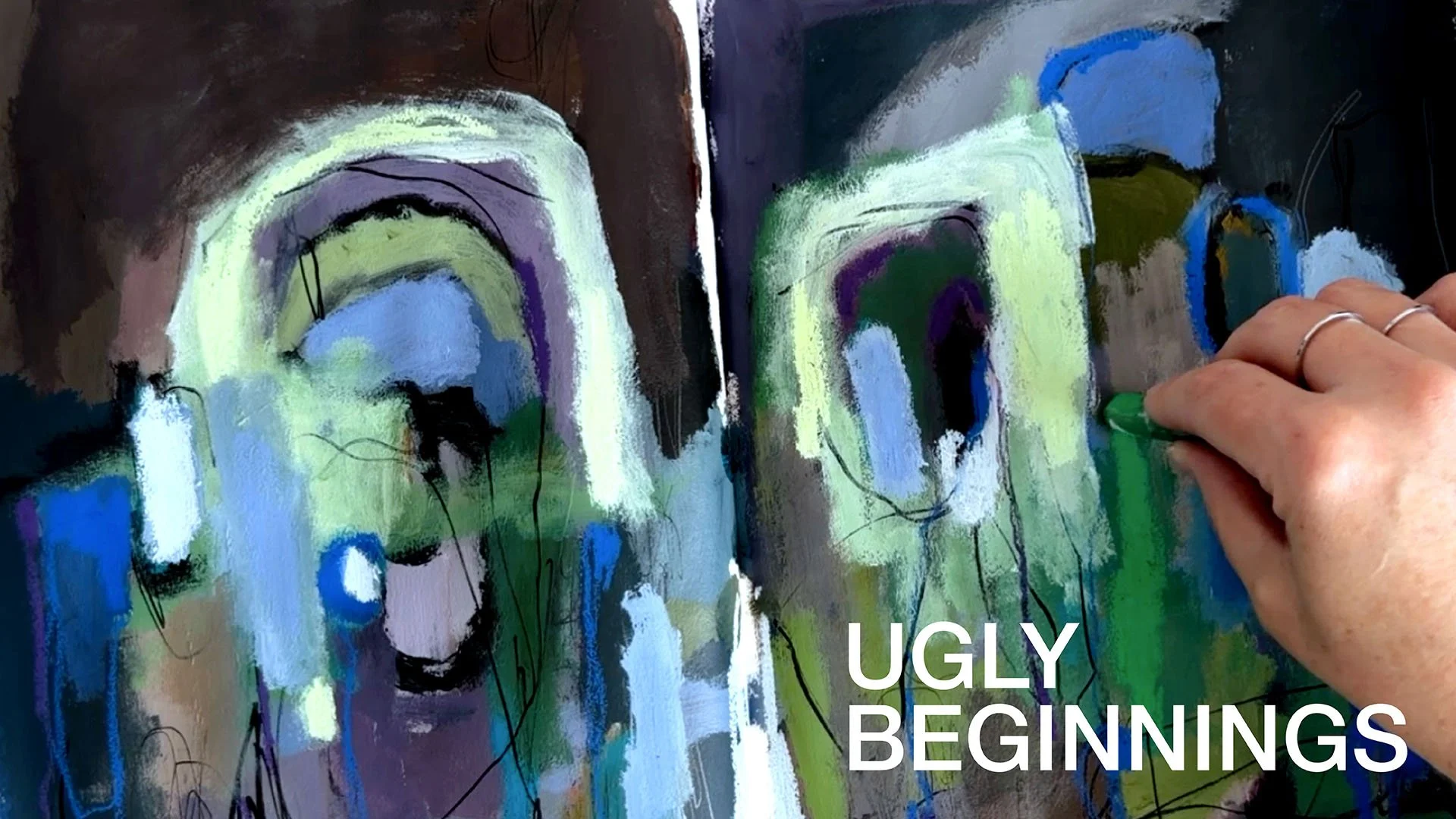
As I’ve mentioned before, I love working in sketchbooks because there is so little tension or expectation, or at least there shouldn’t be, just unadulterated creative exploration.
However, when I first started painting, I was absolutely paralyzed by my sketchbook, by any medium really. That empty white page felt like just another way to mess something beautiful up with my inadequacy. It was almost impossible to begin painting because I had this ridiculously human belief that instantaneous perfection was possible for those who were born with talent. Since I wasn’t born with the talent to be an incredible abstract artist the first time my paintbrush touched the canvas, maybe painting in a sketchbook was a silly pastime that I should avoid, because all the great artists were born with talent, right?
I sat for weeks staring at the blank page and when I finally painted my first abstract, I was appalled at how ugly it was. I almost gave up, but something inside of me said, I must paint. So, I started painting and drawing subjects that felt safe until I could bring myself back to painting really ugly abstracts. Thanks to a number of accomplished abstract artists online who spoon fed me some reality, I took on an artist’s challenge to paint 30 abstract and track the progress from start to finish, and that was such an incredible experience.
In the beginning, I painted mostly muddy mush. I did find I had an eye for color, but I didn’t know how to paint in layers or work with values. Blobs of paint with a haze of definition is how I would describe my early work. Once in a while, however, something magical would happen and through the mush of colors, a faint composition would appear and my heart would leap at the thought that maybe painting was a skill I could develop after all, and I could learn to be the artist I felt I was in my heart.
I’m glad that limited mindset is, for the most part, behind me, and I’m so grateful to the many artists who shared their stories that altered my perspective and gave me hope.
Every skill is developed with practice, why do we treat art differently? If I wanted to be an artist, I was going to disappoint myself over and over with ugly art until I stopped painting to be good and started painting because I loved it.
I’ll be honest, I didn’t love it at first. I wanted to paint abstracts, and although abstraction is often dismissed as something anyone—even a child—can do, I've found the opposite to be true. As an artistic discipline, abstraction is quite difficult and takes many hours of practice to develop the skill and even longer to find your own artistic voice in it.
How do I feel about my work now that I’m several years and many many hours in?
When you finally paint something you’re not ashamed to hang on the wall, a painting that you truly like, not because you painted it but because it speaks to you, that is an amazing day. When that starts happening over and over, you know you’re on to something.
I’ve now painted many pieces that I love enough to hang on my wall, and I’m super picky about what I hang on my limited wall space. That means, I’m also painting work I feel excited to share with others, work I believe in. But I don’t expect everyone to love my art.
Art is so subjective. What is good art and how does one create it? Is that question even realistic? Can it be answered objectively?
The truth is, it doesn’t really matter because most artists create for reasons outside of the purview of that question any way. Artists create because they must, not because others acknowledge their artwork or think it is good. How many celebrated creatives died before anyone appreciated their work. So many.
Why waste time worrying about how good your art is or if anyone will like it? Instead, I worry about finding those who need my art as much as I have needed the particular pieces of art that moved and transformed me.
Long story short, I’m thankful my sketchbook doesn’t have feelings. It doesn’t know if I’m a professional artist or a newbie afraid to walk down the canvas aisle at the local art supply store. It’s inert. I would argue that a blank page cares more about your feelings than most people on social media. It’s there. It’s open. It doesn’t demand. It invites. A blank white page cares about your feelings. It’s there for you no matter how appallingly ugly your creativity is.
Sometimes, the pages in my sketchbook are hideous. Then, I leave and come back to those same pages a week or two later and think, huh! That’s not so bad. In fact, I even like it.
I guess what I’m trying to say is, everyone starts at the beginning. The most accomplished artists still receives criticism. It’s human nature to criticize. Not being good enough is where most of us live most of the time, but a sketchbook doesn’t know any of that. So make some ugly art and leave the perfectionists to the creation of nothing.